


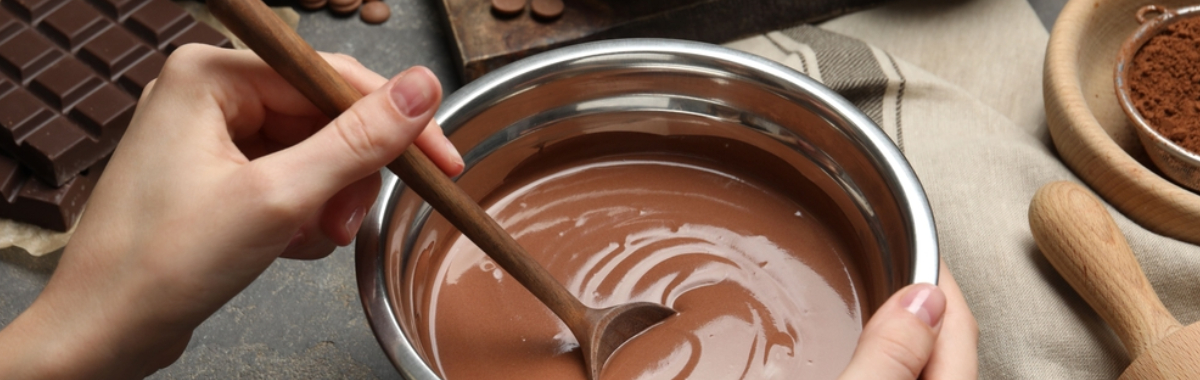
The role of fat in chocolate and confectionery coatings
Without the fat phase, neither chocolate nor coating would hold its shape, break properly, or melt as intended. The proportion and type of fat determine how chocolate snaps, how it melts in the mouth, what its surface looks like, and how it behaves during industrial processing.
What fat affects
- Structure and snap – crispness, smoothness
- Melt in the mouth – rate of melting and the final mouthfeel on the palate
- Processability – viscosity, tempering requirements, setting speed
- Stability – susceptibility to greying, fat bloom, and changes in appearance
- Cost – cocoa butter is significantly more expensive than most vegetable fats
This is why different types of fats are used in practice depending on whether the product is a chocolate bar, confectionery coating, or, for example, a praline filling.
Cocoa butter as the foundation of chocolate
In chocolate bars, pralines, and chocolate drops, the primary fat is cocoa butter. When properly tempered, it is precisely what provides the characteristic snap, smooth melt, and clean chocolate character that people associate with genuine chocolate.

Types of fats in chocolate
In chocolate, the main fat is cocoa butter. In milk chocolate, it is complemented by milk fat from milk powder. Together, they determine the flavour, structure, and the way the chocolate behaves during production and consumption.
Cocoa butter
Cocoa butter is a natural fat obtained from cocoa beans. Its melting point is close to human body temperature, which allows chocolate to melt easily and pleasantly in the mouth. When properly tempered, it gives chocolate gloss, a clean snap, and a smooth mouthfeel without a waxy sensation.
Milk fat
In milk chocolate, fat from milk powder is also part of the recipe. It adds a milder, creamier character and rounds off cocoa bitterness. The result is a smoother texture and a “softer” flavour profile that consumers expect from milk chocolate.
Vegetable fats
Selected vegetable fats are also used in Carla praline fillings, for example a blend of shea butter, coconut fat, and sunflower fat. These fats help establish the structure of the fillings so that they remain creamy, stable during storage, and compatible with the chocolate shell. We always declare them in the ingredient list of each specific product.
Fats in confectionery coatings
In confectionery coatings, the main goal is easy and reliable use in production. The coating must flow well during application, set quickly and evenly, and remain stable on pastries, slices, or desserts even when the display case is opened frequently. This is why special vegetable fats are used instead of cocoa butter.
Special vegetable fats in coatings
Carla confectionery coatings are based on carefully selected vegetable fats that technologically replace cocoa butter. In some products, these include fats based on palm or palm kernel oil in certified RSPO quality; in others, they are combined with additional vegetable oils. These fats do not require tempering and make it possible to achieve a stable coating with predictable behaviour in production.
- Advantages
Simpler handling without tempering, reliable performance during dipping and enrobing, rapid setting, and a stable appearance across batches, even in higher-volume production. - Disadvantages
A different mouthfeel compared with chocolate based solely on cocoa butter, and some consumers’ sensitivity to the type of vegetable fat used.
Palm and palm kernel fat
Palm and palm kernel fat are among the commonly used fats in the food industry for confectionery coatings and fillings. They have a suitable melting point and, when properly processed, provide the coating with firmness and stability. Although legislation allows up to 5% vegetable fat to be used in chocolate, in Carla chocolate drops and chocolate bars we do not use vegetable fat.
Flavour and structure: chocolate vs. coating
Chocolate based on cocoa butter has a more complex cocoa profile, a more pronounced snap when bitten, and a delicate melt in the mouth. Confectionery coatings based on special vegetable fats usually have a more straightforward chocolate flavour, often a slightly sweeter profile, and a structure tailored to the specific application, such as coating pastries, slices, or desserts for display.
Which fats do we use?
At Carla, we work with different types of fats depending on whether we are producing chocolate bars, chocolate drops for confectioners, confectionery coatings, or filled pralines. For each product line, we choose a combination that makes sense in terms of flavour, technology, and consumer expectations.
- Chocolate bars and cooking chocolate
In chocolate bars and cooking chocolate, the primary fat is cocoa butter, supplemented in milk variants by milk fat from milk powder. The aim is a clean chocolate profile, smooth melt, and the texture people associate with real chocolate.
- Chocolate drops for confectioners and bakers
Carla chocolate drops are a chocolate format intended for professional use. We produce them in dark, milk, and white varieties, and formulate them with cocoa butter without the use of palm oil. Thanks to their practical drop format, they are easy to dose, melt well, and maintain consistent quality throughout production.
- Confectionery coatings for professional production
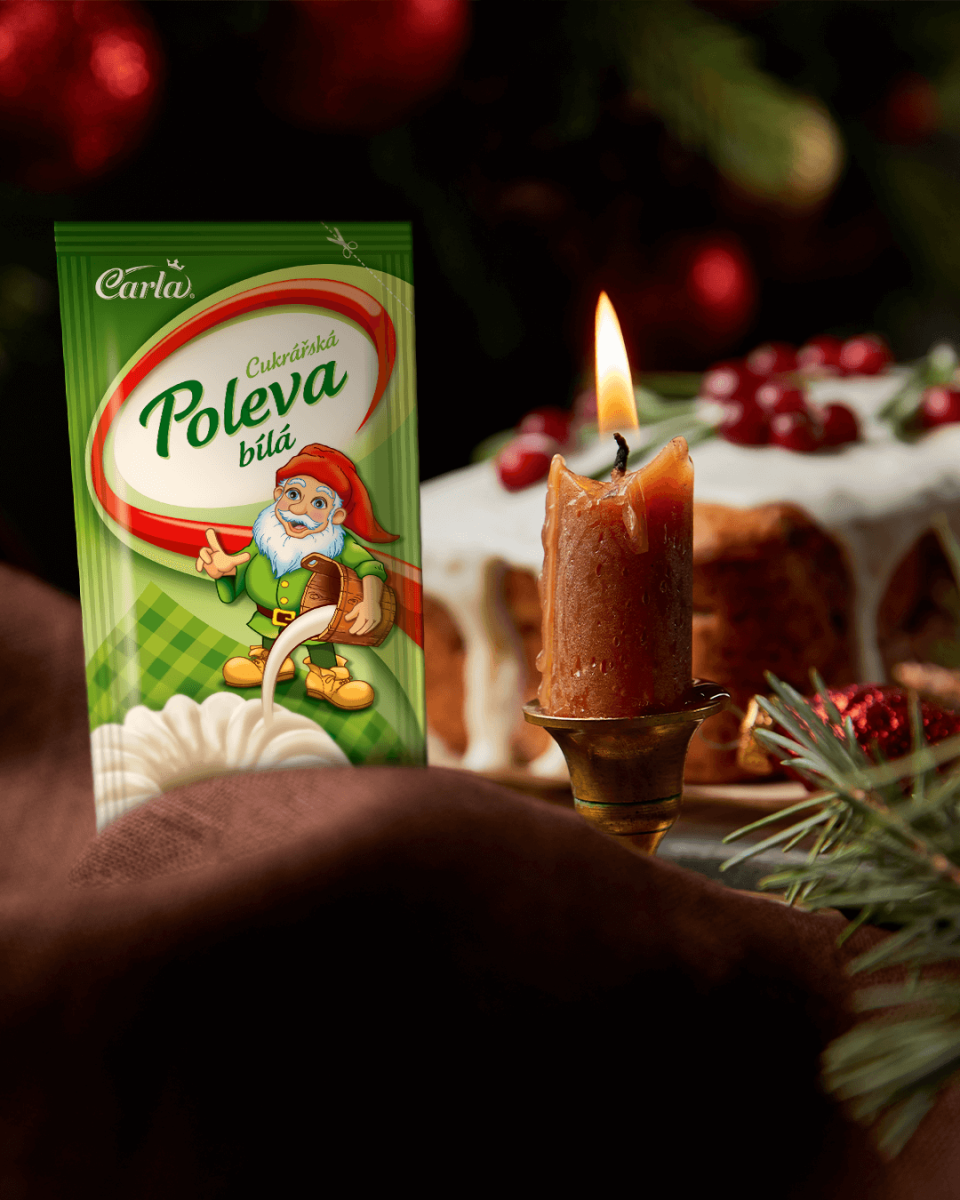
In confectionery coatings, we use special vegetable fats that replace cocoa butter wherever simple and stable processing is required. The coatings are designed to melt well, spread evenly, and set quickly on pastries, cakes, or slices, without the need for tempering or complex technological steps.
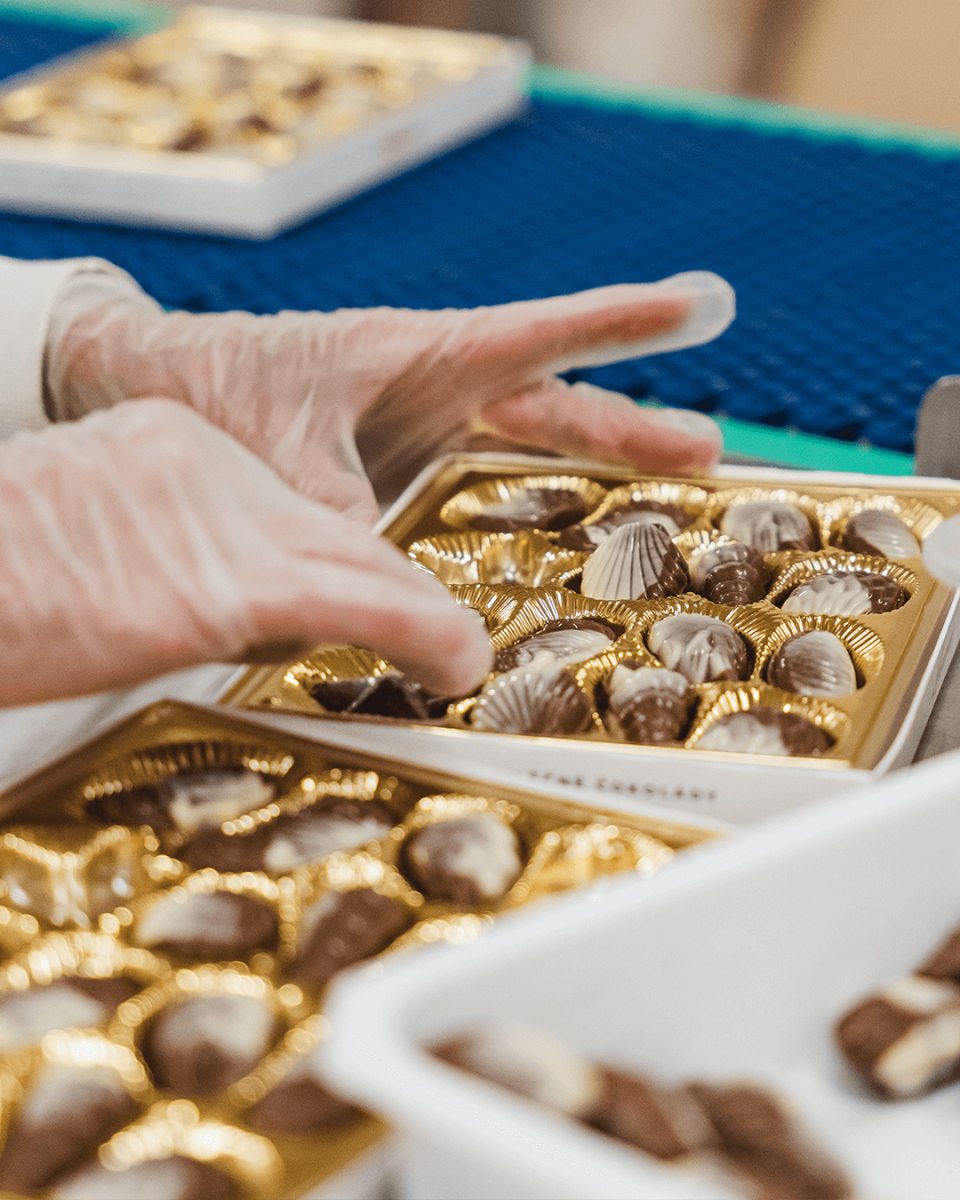
- Pralines and filled chocolates
In pralines, we combine chocolate based on cocoa butter with selected vegetable fats in the fillings, typically shea, coconut, or sunflower fat. This allows us to tailor the required filling structure, stability, and flavour so that it works harmoniously with the chocolate shell while also performing well during storage and distribution.