In professional confectionery and food production, chocolate and other ingredients are purchased in larger volumes. This makes it all the more important to have appropriate storage conditions in place to protect their quality from goods receipt through to their actual use in production. Proper storage is not just a matter of keeping the warehouse organised. It is part of process control and helps maintain consistent flavour, repeatable results and a lower risk of unnecessary losses.
Stable temperature is essential
Chocolate is sensitive to temperature fluctuations. At excessively high temperatures, it may soften, lose its gloss and develop fat bloom. Rapid changes between cold and warm conditions can also cause condensation on the surface, which may lead to sugar bloom.
Chocolate and chocolate-based semi-finished products should be stored in a cool, dry, dark and well-ventilated place. In practice, a stable environment is more important than an extremely low temperature. Chocolate should not be kept unnecessarily in a refrigerator or freezer unless this is specifically required by the production process or the product specification.

Ideal storage conditions may vary depending on the specific product, packaging and manufacturer's recommendations. As a general rule, chocolate made with cocoa butter benefits from a stable, cool environment of approximately 15 to 20 °C, away from direct sunlight, heat sources and sudden temperature changes. For confectionery coatings and compound products, specifications commonly allow storage at temperatures up to 25 °C; as a manufacturer, however, we prefer conditions similar to those used for chocolate, i.e. 15 to 20 °C. For both coatings and chocolate, low relative humidity should also be maintained, as moisture can adversely affect product properties and processing performance.
Moisture is the greatest enemy of appearance and processability
Moisture can cause so-called sugar bloom on chocolate. This occurs when water condenses on the chocolate surface, partially dissolves the sugar and, after evaporating, leaves whitish sugar crystals behind. This does not make the product unsafe to eat, but it loses its typical sensory properties, including its premium appearance, smoothness and pleasant eating quality.
In a production environment, it is therefore important to protect chocolate and coatings not only from direct moisture but also from condensation. Condensation may occur, for example, when a cold ingredient is moved into a warmer room, when packaging is opened before the product has reached ambient temperature, or when it is stored in an area with an unstable climate.
- Do not open cold packaging immediately after moving it into a warmer room. Allow the product to reach the ambient production temperature first.
- Store ingredients in closed packaging. This protects them from moisture, dust and odours.
- Avoid storage near doors, heaters, windows or refrigeration units. These areas are typically subject to the greatest temperature differences.
- Monitor relative humidity in the warehouse. For chocolate and confectionery products, a drier environment is generally safer.
Chocolate drops: a practical format with the same sensitivity as chocolate
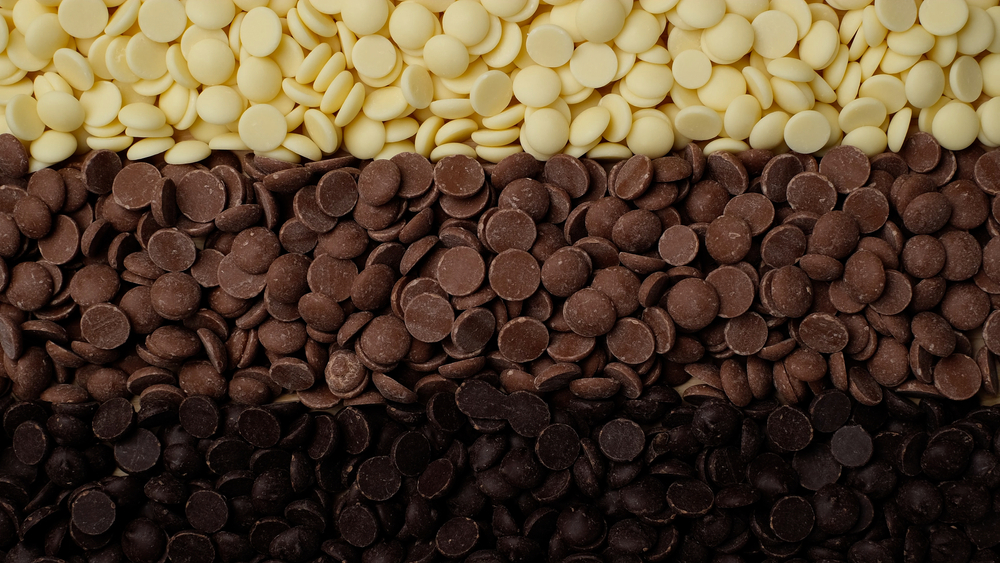
Chocolate drops are popular in pastry shops, bakeries and food production because they are easy to dose and melt evenly. From a storage perspective, however, they require the same careful handling as any other chocolate made with cocoa butter.
It is important to protect them from heat, sunlight, moisture and odours. Chocolate readily absorbs surrounding aromas, so it should not be stored near spices, coffee, cleaning products, onions, garlic or other strongly aromatic ingredients. In larger production facilities, it is advisable to store chocolate drops in a separate dry zone, away from ingredients with strong odours.
- For pralines, ganache and premium desserts, proper storage is essential for the final flavour and appearance.
- For use in doughs and batters, the drops should remain dry and free-flowing.
- For melting and tempering, it is important that the chocolate has not been damaged by temperature fluctuations.
Confectionery coatings: a reliable solution that needs dry storage
Confectionery coatings are designed for easy processing, quick use and consistent results when coating, dipping or decorating. Compared with chocolate made with cocoa butter, they are generally easier to work with because they do not require tempering. This does not mean, however, that they are insensitive to storage conditions.

For coatings, the key factors to control are stable temperature, moisture and properly closed packaging. As temperature rises, rheological properties can change significantly. Put simply, this means how the coating flows once melted.
If a coating is stored for an extended period under unsuitable temperature conditions, it may become more difficult to melt, remain excessively thick after melting and flow poorly during coating; in extreme cases, application may become almost impossible. Moisture uptake can further impair processability, increase viscosity and adversely affect flow during application. Deterioration in rheological properties is even more noticeable in coatings containing milk components, so particular attention should be paid to milk and white coatings.
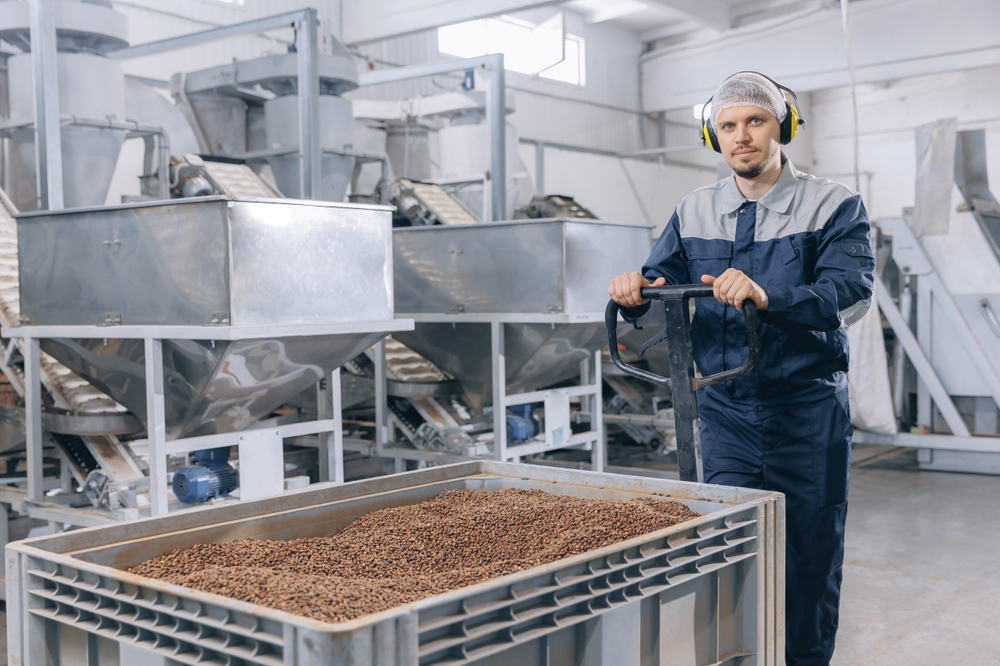
In facilities with higher consumption, it is advisable to introduce a simple control system: intact packaging, a clean and dry storage area, batch traceability, compliance with the FIFO principle and protection from direct heat. For bulk liquid deliveries or tank storage, always follow the technological settings recommended for the specific type of coating.
Ice cream coatings: distinguish between storing the ingredient and the finished product
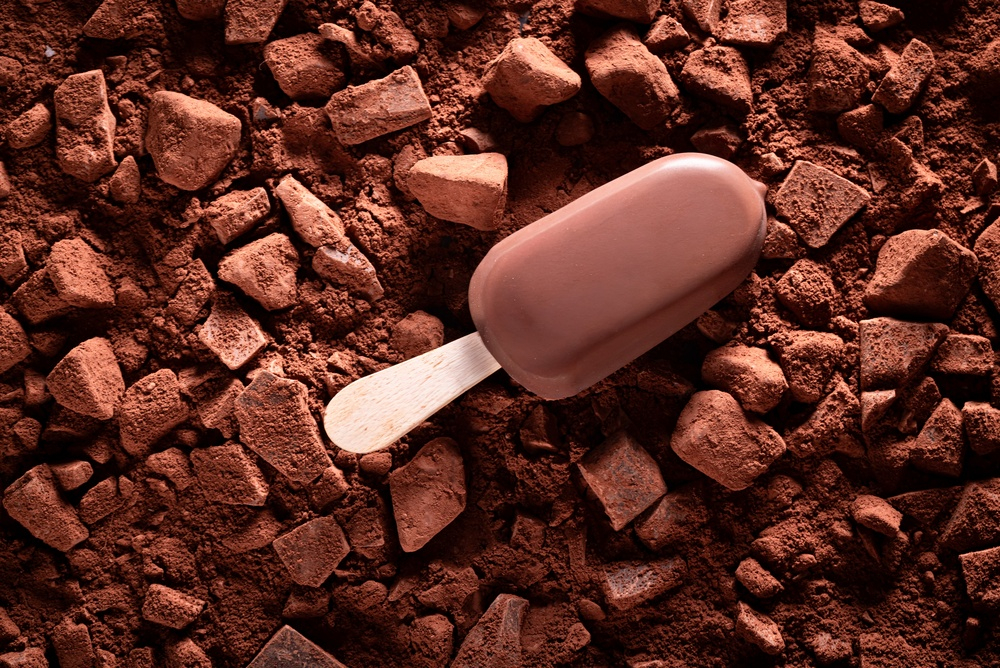
Coatings for ice cream and frozen desserts are developed to set quickly on a cold surface, form an even layer and retain the required gloss, colour and snap. It is therefore important to distinguish between two stages: storage of the coating itself before use and storage of the finished frozen product.
The coating itself must be stored according to the product type and the manufacturer's recommendations. Blocks require a dry and stable environment, while bulk liquid products require the correct technological conditions in the storage tank. A finished ice cream bar or frozen dessert must then be handled according to the requirements for frozen products, where maintaining a stable cold chain is critical. Repeated temperature fluctuations can damage not only the ice cream component but also the coating itself.
Fillings, pastes and fondant: protect consistency
For cocoa and hazelnut fillings, pastes and fondant, proper storage is important primarily for maintaining consistency, flavour and ease of dosing. These ingredients are often used as ready-to-use components designed to speed up production and ensure repeatable results. However, if moisture, contaminants or foreign odours enter the packaging, the advantages of a ready-to-use semi-finished product can quickly be lost.
After opening, contact with air should be minimised, clean utensils should be used and the packaging should always be closed properly. Fondant must be protected from both drying out and moisture uptake. Drying can cause the surface to harden, while excess moisture can alter its structure and processing properties.
- Fillings and pastes should be refrigerated after opening and used within 2 weeks. Always close the packaging properly and use a clean utensil when removing product.
- Fondant should be stored at a temperature of up to 10 °C after opening and used within 2 days. Protect it from drying out, moisture and direct heat. The short recommended use period also reflects its susceptibility to mould growth. Always close the packaging properly and use a clean utensil when removing product.
- Opened packaging should always be marked with the opening date and the contents used in accordance with the facility's internal procedures.
- For all ingredients, follow the label, the manufacturer's specification and the facility's internal HACCP system.
Quick reference for storage and production
A white coating does not automatically mean the chocolate is spoiled
If a whitish or greyish coating appears on chocolate, it is most commonly bloom. This can be either fat bloom or sugar bloom. Fat bloom, which occurs more frequently in practice, develops mainly when chocolate is exposed to elevated or fluctuating temperatures.
In properly tempered chocolate, the cocoa butter crystals are predominantly present in the desired stable form, giving the chocolate a glossy appearance and a characteristic clean snap. If the temperature rises, these stable crystals begin to melt and, during subsequent cooling—even if the temperature drop is small—the cocoa butter may recrystallise into less stable forms and migrate towards the surface. The result may be a greyish-white, matte coating that is smooth or patchy and may appear greasy.
Sugar bloom, by contrast, is associated with moisture and condensation and tends to be dry, rougher and crystalline. In both cases, the main issue is a deterioration in appearance and sensory quality. The situation is different if the product has an unpleasant odour, an off-flavour, a tacky surface, visible mould, or has been stored for a prolonged period in damaged packaging and unsuitable conditions. In such cases, it is better not to use the ingredient and to proceed in accordance with the facility's internal quality procedures.
Storage is part of quality management, not just logistics
In production, attention is often focused on recipes, processing technology or production-line performance. Storage, however, determines the condition in which an ingredient actually reaches production. Even high-quality chocolate or coating can lose its properties if exposed to heat, moisture, odours or repeated temperature shocks.
Practical checklist for production facilities
- Maintain a stable temperature without sudden fluctuations.
- Control humidity and prevent condensation on both packaging and ingredients.
- Store products in closed packaging and away from strongly aromatic substances.
- Protect ingredients from light, dust and pests.
- Follow FIFO and manage batches according to receipt date and shelf life.
- Always reseal packaging after opening and label it in accordance with the facility's procedures.
- Follow the product's technical specification, particularly for coatings, fillings, fondant and bulk liquid products.
Properly managed storage helps keep ingredients in good condition, reduce losses and ensure that a product behaves consistently in production today, next week and in the next batch. This repeatability is one of the most important quality parameters in professional confectionery, bakery and food production.